

Shares and shareholders
We have written previously about why a company might want to add new share classes, e.g. changing some or all of a company’s ordinary shares to A and B shares (alphabet shares). That post can be found here: Why might a company…
What is a corporate shareholder?
A corporate shareholder is a company, partnership, trust or business entity that owns shares in another company. It is perhaps easiest to remember by simply stating that a corporate shareholder is a non-human shareholder.…
Dividend taxation: higher rate and additional rate taxpayers
Having already looked at the main rules on how dividends are taxed and how those affect basic rate taxpayers. The tax on dividends can be more complex where the dividends become subject to higher rate or additional rate tax. In…
How are dividends taxed?
Dividends are the return paid to shareholders from the profits made by a company. Partly because of potential tax advantages, the owners of small companies will often choose to pay themselves a combination of dividends and salary…
Dividend waiver: what you need to know
You’ve decided to share your profits with your shareholders by issuing a dividend, but what if not everyone wants to take it?…
What types of share can a company have?
Most companies only ever have one type of share (or class of share). These are commonly called ordinary shares and will be the ones the company was incorporated with. The typical rights that go with ordinary shares are:…
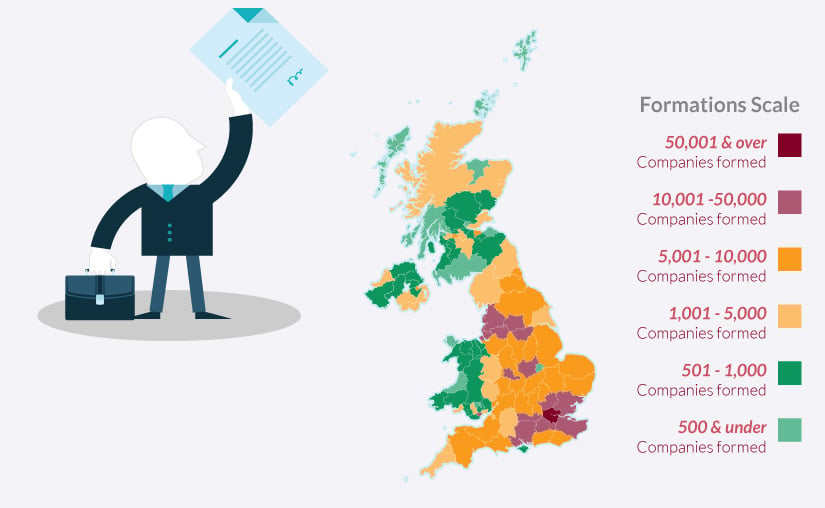
2025 Review
of UK Company Formations
Read our comprehensive review of UK company formations in 2024, year-on-year growth rates and breakdown by county. This detailed insight is provided in the form of easy to understand infographics available for sharing through social media and on your own website
